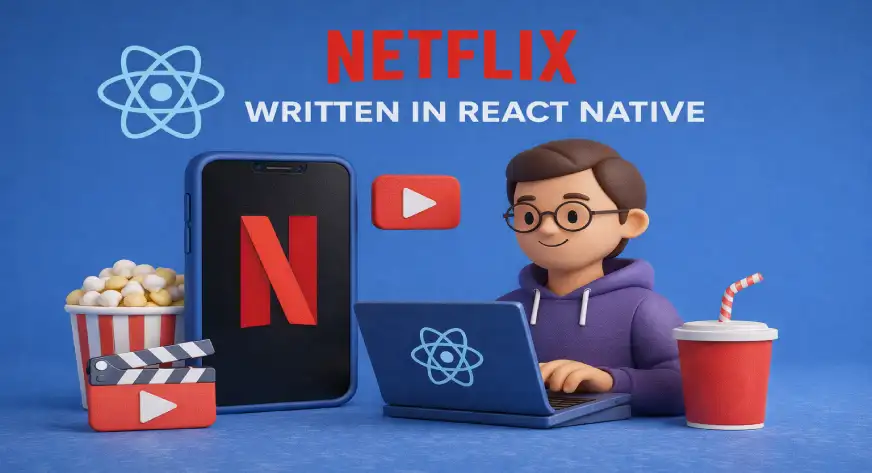
No, Netflix is not written in React Native. Netflix mainly builds its mobile applications using native technologies, Swift or Objective-C for iOS and Kotlin or Java for Android. While Netflix does use React and other web technologies for its web platform and some internal tools, the core mobile apps rely on native development to ensure better performance, stability, and a smooth user experience.
If you’ve ever streamed your favorite show on Netflix and wondered what technology powers it, you’re not alone. Developers and tech enthusiasts often ask “Is Netflix written in React Native?” After all, React Native has gained massive popularity for building high-performing mobile apps for both Android and iOS using a single codebase.
So, does Netflix use React Native? The short answer not completely, but partially. Netflix doesn’t run entirely on React Native, but it does use it for specific parts of its platform, mainly for TV interfaces and mobile features. Let’s explore how and why React Native fits into Netflix’s massive technology stack and what this means for developers.
Before we dive deeper, let’s connect the dots by understanding what React Native really is and why so many major companies use it.
What is React Native?
React Native is a popular open-source framework developed by Meta (formerly Facebook) that allows developers to build cross-platform mobile applications using JavaScript and React. Instead of writing separate code for Android and iOS, React Native enables you to use one shared codebase that runs smoothly on both.
It uses native UI components, meaning the apps feel and behave like native ones fast, fluid, and responsive. Over the years, React Native has become a go-to choice for companies looking to save time, reduce costs, and still deliver high-quality user experiences.
So, Does Netflix Use React Native?
No. Netflix primarily uses React Native for its TV application especially on platforms like PlayStation, Xbox, and smart TVs. The main mobile app for Android and iOS, however, is still built using native technologies such as Java (for Android) and Swift (for iOS).
The reason is that Netflix’s mobile apps handle a huge amount of real-time video streaming and require the highest possible performance. While React Native is fast, native languages still provide more control for performance-heavy applications like Netflix’s main app.
That said, Netflix has used React Native to streamline its user interface updates, prototype testing, and internal tools. For example, the Netflix TV interface the one you see when browsing movies on your smart TV relies on React Native because it allows for rapid feature rollout across multiple platforms without rewriting everything.
Why Netflix Chose React Native for Some Features?
There are several reasons why Netflix integrates React Native into parts of its ecosystem:
- Cross-Platform Consistency: With React Native, Netflix can design and maintain a consistent user interface across multiple devices like TVs, game consoles, and streaming boxes.
- Faster Updates: It’s much quicker to push UI or feature updates across platforms using a shared codebase rather than maintaining several native versions.
- Cost and Time Efficiency: React Native allows engineers to focus on improving existing features instead of rewriting code for each platform.
- Simplified Maintenance: Common bug fixes and performance improvements can be deployed universally, reducing effort and complexity.
Netflix’s use of React Native shows how even large enterprises combine native and cross-platform technologies to get the best of both worlds performance and flexibility.
Why Doesn’t Netflix Fully Use React Native?
While React Native offers great advantages, it’s not perfect for every use case especially for a streaming platform as massive as Netflix. Here’s why:
Performance Requirements
Netflix’s core business revolves around high-quality video streaming. Native technologies give developers direct access to low-level APIs and performance optimizations that React Native can’t fully match yet.
Complex Native Features
Many Netflix features like advanced video playback, offline downloads, and adaptive streaming require deep integration with device hardware. These are often easier to build and maintain with native code.
Large-Scale Infrastructure
Netflix’s mobile and backend systems are enormous, serving millions of concurrent users. Maintaining top-tier performance and reliability across that scale is easier with native codebases optimized for each platform.
Team Expertise
Netflix has a long history of using Java, Kotlin, and Swift. Their engineering teams are experts in these languages, making it more efficient to continue developing natively while selectively using React Native for specific UI needs.
What Can Developers Learn from Netflix’s Approach?
Netflix’s decision to mix native and React Native development offers a valuable lesson for developers and businesses alike. You don’t have to choose one over the other the best approach often depends on your app’s goals and complexity.
If your app focuses heavily on visual interfaces, general content browsing, or e-commerce-style features, React Native can be an excellent fit. But if your app relies on performance-intensive features like video rendering, graphics-heavy games, or complex background tasks, native development might be more suitable.
In short, Netflix’s approach shows that React Native works best when strategically combined with native technologies.
Examples of Other Apps Built with React Native
Netflix isn’t alone. Many global brands have used React Native successfully for mobile app development:
- Instagram: Uses React Native for its push notifications and other UI components.
- Facebook: The platform that created React Native uses it across several parts of its app.
- Uber Eats: Uses React Native for parts of its restaurant dashboard interface.
- Walmart: Migrated parts of its app to React Native to save time and improve development efficiency.
These examples prove that React Native is more than capable of powering large-scale, feature-rich applications provided it’s implemented thoughtfully.
Also Read, What is the Best Website Frameworks in 2025
Should You Use React Native for Your App?
Here are some situations where React Native makes the most sense:
- You want to develop for both iOS and Android without maintaining two separate codebases.
- Your app focuses on user interface and functionality rather than high-end hardware performance.
- You need to launch quickly and iterate often.
- You already have a team skilled in JavaScript or React web development.
However, if your app needs heavy multimedia features, complex animations, or real-time performance like Netflix’s streaming engine native development might still be your best option.
How to Decide: React Native vs Native Development?
To choose wisely, ask yourself these questions:
- What’s more important speed of development or absolute performance?
- How complex are the app’s native requirements?
- What skills does your development team already have?
- What’s your long-term maintenance plan and budget?
There’s no one-size-fits-all answer the right decision depends on your goals, audience, and resources.
Conclusion
Netflix is not fully built with React Native. It mainly uses native technologies like Swift, Objective-C, Java, and Kotlin to ensure high performance for video streaming. React Native is used only for specific parts, such as TV interfaces and internal tools, where faster development and cross-platform consistency are needed. Netflix’s approach shows that combining native and cross-platform technologies is often the best way to balance performance, flexibility, and speed.
If you’re planning to build a mobile app and aren’t sure whether to go React Native or native, Webworks Co. can help you choose the right technology stack. Our experienced team builds high-performing, user-friendly apps tailored to your goals whether for startups or enterprises.